
Stainless steel knife gate valve enquiries start with components
When a buyer requests a stainless steel knife gate valve, the description often leaves open which parts are actually stainless. A valve may combine an iron or steel body with a stainless gate, elastomer seats and a separate yoke, and each part faces different conditions. Propeller Pumps offers a range of knife gate valves, and this guide explains how to compare cast iron, ductile iron, carbon steel and stainless steel one component at a time rather than by a single label.
The aim is not to rank materials. Each family suits some services and not others, and the right choice depends on chemistry, solids, pressure, temperature and the records a project needs. This article covers terminology, service review, ratings and documentation, so engineers and buyers can send a precise enquiry and receive a proposal they can verify against their own specification.
Knife gate valve materials for body, gate and other components
A complete material schedule should name the body, gate or blade, seats, sleeves or lining, packing and elastomers, stem, fasteners, yoke and other external supports. These parts do not share the same exposure. The body is pressure retaining and usually wetted, the gate is wetted and moves through the flow path, while the yoke and many fasteners sit outside the process entirely.
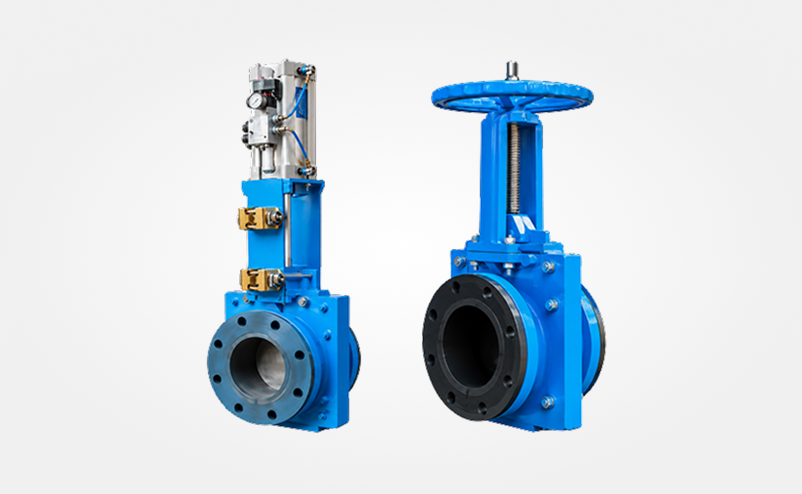
This is why an iron body with a stainless steel gate is a different specification from a stainless steel body and gate assembly, even when both are loosely called stainless. Propeller Pumps lists a 316L stainless steel gate among the features of its knife gate valves. Buyers should read this as a statement about the gate alone and confirm the body and other wetted materials for the specific model and size selected.
Cast iron knife gate valve vs ductile iron knife gate valve
Both materials are iron carbon alloys containing free graphite, but the graphite shape differs. In conventional grey cast iron the graphite forms flakes, which act as internal discontinuities and limit ductility. Ductile iron is treated during production so that the graphite forms rounded nodules, which generally gives greater toughness and elongation. Actual properties still vary from grade to grade, so the family name alone is not a specification.
When comparing a cast iron knife gate valve with a ductile iron knife gate valve, confirm the exact body grade and material standard, the applicable mechanical requirements and the documented pressure and temperature rating of the complete valve. Any internal lining or protection should also be stated, and external exposure should be described so a suitable finish can be agreed. Ductile iron improves mechanical behaviour, but it does not by itself resolve corrosion or abrasive wear.
Carbon steel knife gate valve and cast steel knife gate valve specifications
Carbon steel describes a category of steel, while cast steel identifies how a component is manufactured. A cast steel body may be carbon steel, alloy steel or stainless steel. The two terms therefore describe different aspects of the specification rather than competing material choices.
A quotation that says only “cast steel” leaves the grade undefined. For a carbon steel knife gate valve or a cast steel knife gate valve, confirm the exact grade, the applicable specification, the product form or manufacturing route, any required heat treatment and the components each grade covers. Fabricated and cast parts of similar chemistry can fall under different specifications, so the agreed grade should appear on the datasheet.
Stainless steel knife gate valve grades and component scope
The word stainless covers many alloys with different chromium, nickel and molybdenum levels. Their resistance comes from a thin passive surface film, which can break down in some chloride bearing, acidic or reducing conditions and lead to pitting or crevice corrosion. Stainless steel is therefore not corrosion proof, and it does not automatically offer better abrasion resistance than other metals in solids handling service.
For each stainless steel proposal, confirm the exact grade rather than a family name, together with the cast or wrought specification that applies. Cast and wrought designations that look similar are not always interchangeable, so any substitution needs supplier confirmation. Judge compatibility against the actual medium, including chloride level, temperature and cleaning chemicals, rather than assuming it from the word stainless.
Slurry knife gate valve corrosion and abrasion review
Corrosion and abrasion often occur together but need separate assessment. Chemical review depends on composition, concentration, operating temperature, impurities and any cleaning or flushing chemicals. Wear review depends on solids concentration, particle size, shape and hardness, fibrous content and flow conditions. A wastewater treatment knife gate valve, for example, can face very different chemistry and solids from one plant to the next.
For a slurry knife gate valve, confirm how the proposed body, gate and seating arrangement suit the declared solids and chemistry, and share any existing records of corrosion, erosion or wear. Where a rubber lined knife gate valve is proposed, confirm the lining material, the surfaces it covers and its compatibility with the medium and temperature, since a lining protects only the areas it covers.
Knife gate valve pressure and temperature ratings
Buyers should document normal and maximum operating pressure, differential pressure across the closed valve, normal and maximum temperature, transient or upset conditions, required shutoff direction, service duty and connection requirements. These figures allow the supplier to match a valve whose published limits cover the real operating envelope rather than a nominal design case that may never reflect plant conditions.
Body material is only one part of the rating. Gate design, seats, sleeves, packing and seals each have their own limits, and the most restrictive component governs the assembly. Matching flange drilling is one connection check. Also confirm flange facing, gasket arrangement and fastener details separately from the valve’s pressure and temperature rating. Confirm the documented pressure and temperature limits for the exact model selected rather than for the material family.
Knife gate valve material comparison table
The table below summarises what to confirm for each material category and which service questions remain open until the supplier responds. It does not rank the materials, assign cost or corrosion ratings, or suggest pressure capability, because those depend on the exact grade, valve design and documented rating of the selected assembly.
| Material category | Specification to confirm | Service questions to resolve |
|---|---|---|
| Cast iron | Exact grey iron grade and standard; coating or lining | Do pressure, shock loads and external exposure suit its lower ductility? |
| Ductile iron | Exact grade, standard and mechanical requirements; internal protection | Are corrosion and wear addressed separately from strength? |
| Carbon steel, including cast carbon steel | Grade, specification, product form and heat treatment | Does the medium call for lining, coating or another alloy? |
| Stainless steel | Grade for body, gate and other wetted parts; cast or wrought specification | Does the grade suit the chemistry, chloride level and temperature? |
Knife gate valve material certificates and traceability
Before placing an order, agree on a component level material schedule, exact grades and specifications, and the certificates required for each part. Where the project calls for it, specify heat or batch traceability, additional material verification, records for heat treatment, lining or coating, and a clear process for declaring any proposed material substitution.
Review material certificates against the specified grade and confirm how each record is linked to the supplied component. Certification is separate from pressure testing and functional inspection, and it does not prove chemical compatibility or service suitability. Certificate types and inspection scope should come from the project specification, so discuss document scope and acceptance criteria with Propeller Pumps at the enquiry stage rather than assuming any record is supplied by default.
Knife gate valve material enquiry checklist
A complete enquiry provides a clear basis for technical review and helps a knife gate valve manufacturer propose a configuration that matches the actual duty. Grouping the information as shown below keeps service data, component requirements and documentation needs together, so the proposal can be checked line by line against the original request.
- Service: Medium, composition, temperature, pressure and solids information.
- Valve requirement: Size, design, shutoff requirements and connection details.
- Materials: Required body, gate, seating and other component specifications.
- Records: Existing datasheet, material schedule and relevant operating history.
- Documentation: Certificate, traceability and inspection requirements.
Before approval, confirm the proposed model, the material of each component, the documented operating limits and any deviation from the requested specification. Having these points confirmed in writing gives procurement and engineering teams a clear basis for technical approval before the order is released.
About Propeller Pumps and its knife gate valves
Propeller Pumps manufactures, supplies and exports knife gate valves from Ahmedabad, Gujarat. Its published applications include slurry handling, pulp and paper, and water and sewage service. Buyers can discuss component materials, valve configuration and operating requirements with the company for the selected application.
Industrial knife gate valves from Propeller Pumps
Reliable selection comes from a documented valve assembly, not from a broad material label. Share your process conditions and component material requirements with Propeller Pumps when enquiring about its knife gate valves, so that materials, configuration and operating limits can be confirmed for your application before the order is placed.