
Centrifugal Pump Mechanical Seal Selection Begins With Service Data
Every Centrifugal Pump has one point where the rotating shaft passes through the casing, and the mechanical seal contains the liquid there. It uses two flat faces, one turning with the shaft and one stationary, pressed together across a thin liquid film. Whether a centrifugal pump mechanical seal suits a duty depends on what it meets in service.
Propeller Pumps builds centrifugal and chemical process pumps in Ahmedabad for chemical, pharmaceutical, fertiliser, textile and effluent plants. Seals are selected from the duty data the buyer supplies, so a vague entry such as “acid, ambient” leaves the manufacturer and seal supplier guessing.
Reliable pump seal selection rests on three groups of facts: what the liquid and operating conditions demand, how mechanical seal compatibility and support arrangements are confirmed for that service, and which pump sealing requirements and documents the buyer agrees with the manufacturer.
Liquid Composition in Pump Seal Selection
Give the chemical name and concentration of the liquid rather than a trade name or general family. List mixtures, additives, dissolved gases and trace components, since a minor constituent can matter as much as the main one.
State whether composition changes between batches, product campaigns or seasons. A plant that switches grades may present the seal with chemistry it was never reviewed for.
Separate the process liquid from occasional ones. Cleaning agents, flushing solvents, neutralising solutions and washdown steam all reach the sealing area and belong in the enquiry. Add hazard and toxicity data, because the consequence of a leak depends on what escapes.
For dairy, food or pharmaceutical liquids, say so clearly. Propeller Pumps offers a Dairy and Pharmaceutical Pump with seal configurations suited to sterile or pharmaceutical grade handling.
Operating Temperature and Pressure at the Mechanical Seal
Conditions at the seal chamber matter more than nameplate figures. Record normal, minimum and maximum liquid temperatures, plus suction and discharge pressure at rated duty.
Then describe conditions outside steady running. Startup, shutdown, standby, hot washes after cold process runs, and batch swings within a shift rarely appear on a duty sheet, yet the seal experiences all of them.
Flag any risk of vaporisation near the seal, or of dry running when a feed tank empties. Mark which values are normal and which are occasional or upset conditions.
For thermic fluid service, Propeller Pumps offers a special high temperature chemical process pump design on request. A full temperature record shows whether that variant should be considered.
Solids and Crystallisation in Pump Sealing Service
Particles and deposits act on the narrow gap between seal faces. Where known, state whether suspended solids are present, with approximate size, hardness and concentration, and describe fibrous or sticky content separately from hard grit.
Some liquids form solids on their own. Identify any that crystallise, solidify or polymerise on cooling or exposure to air, describe their behaviour while the pump stands idle, and note whether the casing drains clean or holds residue.
If a laboratory report on solids content or deposit behaviour exists, attach it. Measured data is easier to review than a description written from memory.
Your role here is to describe the behaviour accurately. The sealing approach for slurry or crystallising service is then chosen by the pump manufacturer and seal supplier.
Mechanical Seal Compatibility: Faces, Elastomers and Wetted Materials
Two groups of seal materials touch the liquid. Seal faces are the hard rings that slide against each other, while elastomers are the rubber or polymer secondary seals, such as O rings, that seal around the faces and shaft. Both must suit the liquid, its temperature range and its solids.
Share your seal material history: what was used on similar duties, what performed acceptably, and any recorded failures. Add plant restrictions such as approved material lists.
Seal materials and pump wetted materials should be confirmed together. Propeller Pumps offers centrifugal metal pumps in Cast Iron, Cast Steel, SS304, SS316, SS304L, SS316L, Alloy 20, CD4MCu, Hastelloy B and Hastelloy C.
Its PPC series process pump is moulded from polypropylene copolymer for chemical process service, with shaft sleeves chosen for the liquid handled. A Corrosion Resistant Centrifugal Pump casing does not settle the seal material, so neither choice is made in isolation.
Seal Support Arrangements: Flushing, Cooling, Quench and Barrier Liquid
Some duties need help from outside the seal. Flushing circulates clean liquid across the faces, cooling removes heat from the seal area, a quench supplies liquid or steam to the atmospheric side, and a barrier liquid is a separate clean liquid held between two sets of faces.
Whether any of these applies follows from the conditions above. What Propeller Pumps needs from site is the practical information:
- Flushing water, cooling water, steam or other utilities at the pump location
- Space and piping access around the seal area
- Plant preferences for monitoring or alarm connections
- Support systems already used on similar pumps
These details confirm that the selected arrangement can be connected and maintained in your plant.
Leakage Expectations and Pump Sealing Requirements
Pump sealing requirements also reflect what the plant can accept. Define whether any visible leakage is tolerable for this liquid or whether it must be contained.
State the safety, environmental and housekeeping rules in the pump area, any need for drip collection or leak detection, and what a leak would affect, from nearby equipment to drains and personnel.
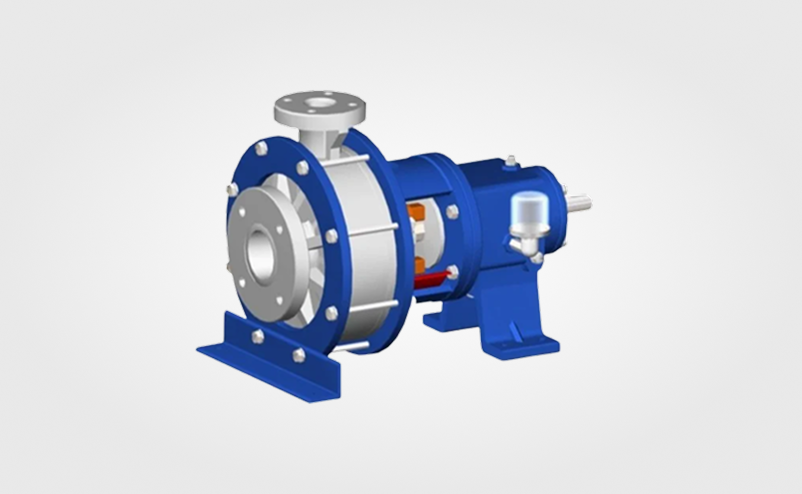
These expectations shape the choice between sealing options. The Chemical Process Pump range from Propeller Pumps uses gland packing as standard, with a mechanical seal version on special request, while the PPC polypropylene series offers either arrangement.
Manufacturer Review and Centrifugal Pump Spare Parts
Before ordering, agree these items with Propeller Pumps:
- A confirmed service data sheet accepted as the selection basis
- The selected seal arrangement and materials
- Any support arrangement, with its utility connections
- Drawings or documents showing the seal area
- Recommended Centrifugal Pump Spare Parts for planned seal replacement
- Responsibility for reviewing deviations if service conditions change
Keep roles distinct. The manufacturer documents the selection made from the data supplied, the buyer confirms that data reflects actual plant operation, and site teams own utilities, piping and operating practices.
Agree a simple rule for later changes. If the plant introduces a new chemical, a higher concentration or a different cleaning routine after supply, the revised data should go back to the manufacturer before the pump runs on that duty.
For spares planning, the back pullout construction lets the rotating assembly, including the seal, be withdrawn without disturbing suction and discharge pipework. The chemical process range also has interchangeable wearing parts, which can simplify the spares list.
Seal Specification Checklist for Centrifugal Pump Enquiries
| Specification Area | Information to Provide | Confirmation Needed from Manufacturer |
|---|---|---|
| Liquid composition | Name, concentration, additives, trace components, cleaning liquids, hazard data | Composition accepted as selection basis |
| Temperature and pressure | Normal, minimum, maximum temperature; suction and discharge pressure; startup, standby, cleaning conditions | Seal arrangement reviewed for the full envelope |
| Solids and crystallisation | Solids size, hardness, content; crystallising or setting behaviour; idle behaviour | Sealing approach suited to solids behaviour |
| Face and elastomer compatibility | Previous materials, failure history, plant restrictions | Faces, elastomers and wetted materials confirmed together |
| Support arrangements | Available utilities, access, monitoring preferences | Whether support is needed, with connections |
| Leakage expectations | Acceptable leakage, containment, detection needs | Arrangement aligned with stated expectations |
| Documentation and spares | Required drawings, data sheet format, spares policy | Drawings, spares list, deviation review responsibility |
A completed checklist lets a discussion with Propeller Pumps, a Centrifugal Pump Manufacturer in India, move directly to configuration. The centrifugal pump range also includes bare pumps for customer drives, stainless steel pumps and CF3 pumps with flanges, giving options for both new installations and existing drive trains.
For corrosive duties, two routes are offered: a metallic Chemical Centrifugal Pump with end suction and top centreline discharge, or the non metallic PPC series.
About Propeller Pumps, Chemical Process Pump Maker in Ahmedabad
Propeller Pumps, an Ahmedabad manufacturer operating since 2008, produces centrifugal process pumps, chemical process pumps, polypropylene pumps, axial flow and mixed flow pumps, knife gate valves, agitators, solid liquid separators, feed pumps and pump accessories, exporting to the Middle East, Africa and Asia. For seal specification, buyers gain metallic and polypropylene material routes, gland packing or mechanical seal options, back pullout construction for seal access, and a technical team that recommends model, material and configuration for each duty.
Share Your Seal Data With Propeller Pumps
Send your liquid data, operating conditions, seal history and site constraints to Propeller Pumps. The team can then propose a Centrifugal Pump configuration and sealing arrangement for your duty.