
Knife Gate Valve Pressure Rating: Why One Figure Is Not Enough
Many valve enquiries state a single pressure figure and nothing else. That figure could mean pipeline pressure, the load on a closed gate, a flange class or a test value, and each reading points to a different Knife Gate Valve.
Propeller Pumps, a Knife Gate Valve Manufacturer, supplies valves for slurry, wastewater, pulp and paper and other demanding industrial pipelines. Each of these services loads a closed gate differently, so a precise enquiry is what narrows the choice.
A knife gate valve pressure rating is only useful once the buyer knows which condition it must cover. This guide works through three questions: what pressures the valve will see, whether its rating, direction, connections and actuator match them, and which documents confirm the offer. Each pressure condition should be stated separately, along with the operating situation in which it occurs.
Valve Differential Pressure and Knife Gate Valve Operating Pressure
Line pressure is the pressure inside the pipeline at the valve. Valve differential pressure is the difference between the two sides of the closed gate. Knife gate valve operating pressure normally describes the first, while the load the closed gate must hold describes the second.
The two values do not move together. A valve isolating a pressurised line from a drained section can see a differential close to full line pressure. A valve with pressure on both sides may see high line pressure but very little difference across the gate.
Your enquiry should cover:
- Normal and maximum line pressure
- Maximum differential pressure with the valve closed
- Whether the valve must open or close against that differential
- Surge or transient conditions identified by the system designer
These values belong to the system design. They must come from the buyer, because a manufacturer has no way to derive them from a valve size or a flange class.
Knife Gate Valve Pressure Rating at Service Temperature
A pressure figure is incomplete without the temperature at which it occurs. Media may run hotter during cleaning or an upset than in normal duty, and the pressure present at that moment is the one the valve must withstand.
Specify:
- Normal, minimum and maximum media temperature
- The pressure that applies at each of those temperatures
- Temperatures during cleaning, startup or upset conditions
- Ambient conditions at the valve location
The published temperature range is minus 20 degrees C to 250 degrees C. Treat it as the span of the whole product line rather than a confirmation for any single build.
Materials decide where a valve sits within that span. Propeller Pumps lists bodies in cast iron, ductile iron, carbon steel, stainless steel or plastic, blades in stainless steel, polyurethane or rubber, and seals in rubber or silicone.
A Stainless Steel Knife Gate Valve chosen for corrosion resistance still needs its blade and seals reviewed at the same pressure and temperature. The complete combination holds the pressure, not the body alone.
Uni Directional and Bi Directional Knife Gate Valve Pressure Direction
Pressure on a closed gate acts from one side or the other, and the valve design decides how it seals. On the knife gate valve, the Uni Directional Knife Gate Valve has sealing optimised for pressure from one side, suited to steady single direction flow such as wastewater discharge and slurry transport lines.
The Bi Directional Knife Gate Valve uses a double seated design intended to seal from either side. The company positions it for lines where flow can reverse or where pressure can act from upstream or downstream.
Include these details:
- Normal flow direction
- Whether pressure can act from the downstream side
- Backflow, reverse flow or pressure reversal conditions
- Whether the valve sits at a dead end or line end
A dead end or line end position matters because the open side may sit at atmospheric pressure, leaving the full line pressure acting on one face of the gate. Declare any possible reverse pressure plainly. A uni directional design should never be expected to hold pressure from the side it was not specified for.
Knife Gate Valve Flange Drilling vs Pressure Rating
Flange drilling describes how the valve bolts to the pipeline: bolt circle, number of holes and hole size. The pressure rating describes what the valve itself can handle. Treating one as the other is a frequent specification error.
Propeller Pumps specifies these as two distinct items for its valves. Published ratings are PN3 (45 PSI), PN6 (90 PSI) and PN10 (150 PSI) depending upon housing material, primarily for liquid applications. Published drilling options are ASME B16.5 / ASME B16.47 #150 and BS EN 1092 PN 10 / PN 16.
PN 16 drilling is offered to suit mating flanges, yet no valve rating above PN10 is published. A drilling match therefore says nothing about pressure suitability.
List:
- Required flange standard and drilling
- Mating flange details, including standard, class and facing
- Valve pressure rating required for the service
Propeller Pumps also names AWWA C520-14 and MSS SP-81 as applicable standards. Ask which of them the offered valve references.
Pneumatic Knife Gate Valve Actuator Closing Capability
A body rating shows that the valve can contain pressure. The operator faces a separate test: driving the gate closed against the differential and through solids, fibres or viscous media that resist the blade.
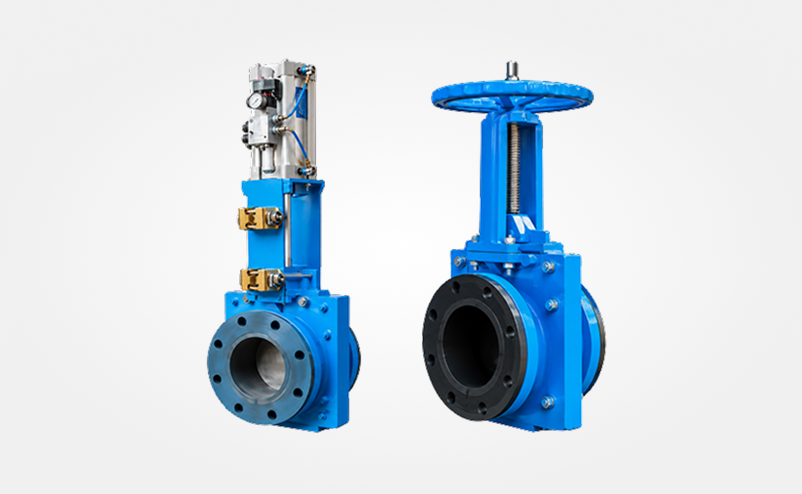
Propeller Pumps offers manual, chain wheel, pneumatic actuator, electric actuator and hydraulic actuator operation. The company describes pneumatic and electric actuators for automated and remote controlled installations with DCS and SCADA integration, so a Pneumatic Knife Gate Valve suits lines that need automated or remote operation.
For the operator, give:
- Preferred mode of operation
- Maximum differential pressure at the moment of closing
- Solids, fibres or viscous media present, as in Slurry Knife Gate Valve duty
- Available air, electrical or hydraulic supply
- Control and position feedback requirements
Without the closing differential and media details, an operator can only be chosen by habit rather than by duty.
Knife Gate Valve Supplier Documentation to Request
Written confirmation turns stated conditions into a verifiable order. From any Knife Gate Valve Supplier, request:
- Data sheet with pressure rating, temperature and pressure direction
- Materials of construction for body, blade and seals
- Flange standard and drilling
- Operator type, confirmed for the stated closing condition
- Dimensional drawing
- Inspection or test records available with supply
The Propeller Pumps website does not describe test procedures or certificates for knife gate valves. Settle which records accompany an order while the enquiry is still open.
Responsibilities stay separate as well. The buyer defines service conditions, the manufacturer confirms what the offered valve meets, and the site team controls how the system around the valve operates.
Knife Gate Valve Pressure Verification Checklist
| Pressure Condition | Information to State | Confirmation to Request |
|---|---|---|
| Line pressure | Normal and maximum values | Rating suits maximum line pressure |
| Differential pressure | Maximum across closed gate; surge if known | Valve holds stated differential |
| Temperature at pressure | Pressure at normal, minimum and maximum temperature | Body, blade and seal combination reviewed |
| Pressure direction | Flow direction; any reverse pressure | Uni or bi directional design agreed |
| Flange designation | Standard, drilling, mating flange | Drilling matches; valve rating stated separately |
| Actuator closing condition | Operator type, closing differential, media, utilities | Operator suited to stated duty |
| Documentation | Documents required with supply | Data sheet, materials, drawing, available records |
With these entries filled in, Propeller Pumps can discuss a suitable design, housing material and operator from its published options.
The range covers 2 inch to 48 inch for non flammable viscous fluids, wastewater, clean water, slurries and heavy oils. Listed applications include mining, wastewater treatment, pulp and paper, power generation, food processing and chemical processing.
About Propeller Pumps, Knife Gate Valve Supplier
Propeller Pumps manufactures axial flow, mixed flow, centrifugal, chemical process, polypropylene, FRP and non metallic pumps, along with feed pumps, process pumps, pump accessories, high flow and submersible agitators, solid liquid separator machines and knife gate valves. Its knife gate valves are available from a single piece order and are exported to markets such as UAE, Saudi Arabia, Singapore, Indonesia and the Philippines.
Send Your Knife Gate Valve Enquiry to Propeller Pumps
Share your line and differential pressures, temperatures, flow direction, flange requirements, media details and actuation preference with Propeller Pumps. The published Knife Gate Valve options are a useful reference while you prepare it.