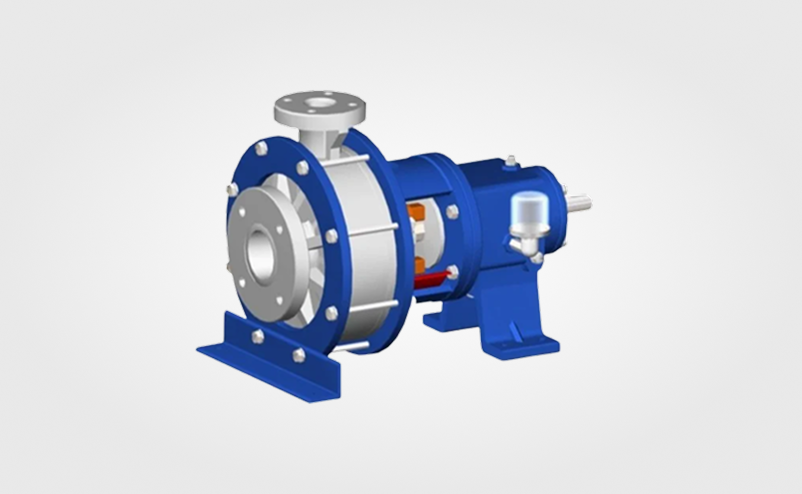

A centrifugal pump impeller has to suit the liquid it moves, the flow and head the process demands and the maintenance routine the plant can support. Reviewing these requirements first helps buyers assess solids handling, wear and the intended operating range.
Propeller Pumps lists closed and semi open impeller options for its centrifugal pump range. Its pump accessories offering also includes open, semi open and closed impellers manufactured to customer drawings and specifications. Buyers should confirm the construction and compatibility required for the proposed pump or replacement component.
Types of Centrifugal Pump Impeller Construction
Every pump impeller carries vanes that transfer energy to the liquid. What separates the three designs is how those vanes are supported. Shrouds are the discs that hold the vanes and form the sides of the liquid passages, and their number defines the construction category.
- Open impeller: Vanes extend from a central hub without front or rear shrouds.
- Semi open impeller: Vanes are supported by one shroud, with the opposite side exposed.
- Closed impeller: Vanes sit between front and rear shrouds, forming enclosed passages.
These are impeller construction categories only. They do not describe the full range of types of centrifugal pumps, which are also distinguished by stage count, mounting orientation and casing arrangement. A single stage centrifugal pump specification therefore does not indicate which impeller a model uses or accepts, so both characteristics must be specified separately.
Pump Impeller Selection for Liquid Cleanliness and Solids
Rather than relying on the shortcut that open designs suit dirty liquids and closed designs suit clean ones, buyers should describe the material in enough detail for the supplier to review the actual impeller passages and the complete pump arrangement. Useful details include:
- Whether the liquid is clean or carries suspended material
- Solids concentration and how much it varies
- Particle size, shape, hardness and abrasiveness
- Fibres, rags or stringy material
- Sticky deposits or constituents that may crystallise
- Blockage or wear history on existing pumps
Three separate risks sit within this information. Solids passage concerns whether particles can physically travel through the impeller and casing. Blockage risk concerns whether fibres or deposits gradually build up on vanes or in passages. Abrasive wear concerns how quickly hard particles erode wetted surfaces. One construction may address one risk without addressing the others.
Closed impellers are not automatically excluded from every liquid containing solids, and an open or semi open design does not guarantee clog free operation with every fibre or slurry. These liquid characteristics give Propeller Pumps a basis for reviewing passage dimensions, materials and the complete pump arrangement.
Centrifugal Process Pump Viscosity and Duty Requirements
Viscosity influences how a centrifugal process pump develops flow and head, and published curves are commonly based on water or another stated test liquid. Before comparing proposals, buyers should supply the measured viscosity, the temperature at which it was measured, expected variation in operation, density where available, any known non Newtonian behaviour and the required flow and head.
The key question for the supplier is whether the proposed performance applies directly to the actual liquid or needs an appropriate assessment. Switching from a closed to an open or semi open impeller does not automatically resolve viscosity related limitations, so any construction change suggested for a viscous duty should come with a documented basis.
Centrifugal Pump Impeller Clearances, Wear and Maintenance
Running clearances control internal leakage and influence how performance changes as parts wear, but the relevant clearances depend on the actual pump design. Open and semi open designs generally rely on the gap between exposed vane edges and the casing or wear plate, while closed designs commonly use wear rings at the eye. Features differ between models, so neither arrangement should be assumed.
Buyers should confirm which clearances apply to the selected assembly, whether they are adjustable, which wear components are fitted and what inspections the manufacturer recommends. The manufacturer’s limits for adjustment or replacement, together with the availability of centrifugal pump spare parts, determine how practical upkeep will be.
Where the solids review identified hard or abrasive particles, the wear discussion should also cover impeller and wear part materials, which are separate checks from construction type and from chemical compatibility. Maintenance access to the rotating assembly depends on the pump model and plant layout.
Centrifugal Pump Performance Curves for the Proposed Impeller
A performance curve is valid only for the pump, impeller construction, impeller diameter and speed it was produced for. Comparing curves from unrelated models cannot prove that one construction is inherently better. Buyers should confirm the following model specific performance information with Propeller Pumps for the proposed configuration:
- Required operating point and expected operating range
- Flow and head
- Efficiency and power demand
- NPSH required, the net positive suction head the pump needs at its inlet
- Pump speed and impeller diameter
- Test liquid and stated conditions
- The manufacturer’s recommended operating range
Buyers should check where their operating point sits relative to the recommended range and compare NPSH required with the NPSH available at their installation, which depends on site suction conditions. The supplier should then confirm suitability for the actual process liquid rather than only the test liquid.
Replacement Impeller Diameter and Centrifugal Pump Compatibility
Impeller diameter is a separate decision from construction type. Within one pump model, diameter shapes the flow and head delivered at a given speed, and a larger diameter is not automatically preferable because it also changes power demand and motor suitability. Buyers should confirm these points with the manufacturer:
- Proposed diameter and the applicable curve
- Exact pump model and assembly compatibility
- Permitted diameter range for that model
- Any proposed trimming and its documented basis
- Motor suitability across the agreed operating range
- Drawing and part identification
For a replacement impeller, a matching diameter, similar appearance or the same nominal pump size does not establish compatibility. Confirm the shaft connection, hub dimensions, vane geometry, running clearances and material against the pump assembly and intended duty. Sharing the pump serial number, existing part number, drawings and original duty helps the manufacturer identify the correct component.
Open vs Semi Open vs Closed Impeller Comparison
The table summarises the distinctions covered in earlier sections. Entries highlight the points buyers should confirm for each design rather than ranking the designs against one another, so the table can serve as a quick reference when comparing supplier proposals for a new pump or a replacement impeller.
| Selection Factor | Open Impeller | Semi Open Impeller | Closed Impeller |
|---|---|---|---|
| Construction | Vanes on a hub without enclosing front and rear shrouds | Vanes supported by one shroud, front edges exposed | Vanes enclosed between front and rear shrouds |
| Liquid and solids review | Particle size, fibres, abrasiveness and deposits against actual passages | Same review against passages formed with the casing or wear plate | Same review against enclosed passage dimensions |
| Clearance and wear checks | Vane edge clearance to casing or wear plate, as applicable | Vane edge clearance to casing or wear plate, plus adjustability if offered | Eye clearance and wear ring arrangement, as fitted |
| Maintenance considerations | Inspection of exposed vane edges and adjacent surfaces | Inspection of vane edges, wear plate and any adjustment provision | Inspection of shrouds, eye clearance and wear rings |
| Performance evidence to request | Model specific curve at stated diameter and speed | Model specific curve at stated diameter and speed | Model specific curve at stated diameter and speed |
Centrifugal Pump Impeller Enquiry Checklist for Propeller Pumps
A complete enquiry lets the manufacturer evaluate the whole arrangement rather than a single component. Before requesting a detailed centrifugal pump proposal from Propeller Pumps, buyers can organise their information under the following headings so nothing is overlooked during review:
- Application: Liquid composition, temperature, viscosity and solids characteristics.
- Duty: Required flow, head, operating range and operating schedule.
- Proposed equipment: Pump model, impeller construction, material, diameter and speed.
- Performance basis: Applicable curves, liquid assumptions and any necessary assessment.
- Maintenance: Relevant clearances, wear parts, access and replacement identification.
- Availability: Which impeller options are offered for the proposed model.
Where a proposal describes a heavy duty centrifugal pump, confirm the construction and service features that support that description for the intended duty. As a centrifugal pump manufacturer, Propeller Pumps can then match the enquiry against its published range and confirm which impeller options apply to the proposed model or replacement component.
About Propeller Pumps and Its Pump Impellers
Propeller Pumps manufactures, supplies and exports centrifugal pumps and pump components from Ahmedabad, Gujarat. Its accessories range includes impellers, shafts and sleeves, with impellers manufactured to customer drawings and specifications. Buyers can discuss complete pump selection or replacement component requirements with the company.
Centrifugal Pump Impeller Selection Support From Propeller Pumps
Whether the requirement is a new centrifugal pump or a replacement component, a well prepared enquiry provides a clear basis for technical review. Share your liquid characteristics, operating duty and existing pump details with Propeller Pumps to confirm the complete pump and impeller arrangement before finalising your specification.