How Centrifugal Pump Manufacturers and Exporters Are Supporting Kenya's Booming Lake Naivasha Flower Farms and Export Horticulture Sector
Introduction: Kenya's Floriculture Industry - A Global Powerhouse Rooted in Precise Irrigation
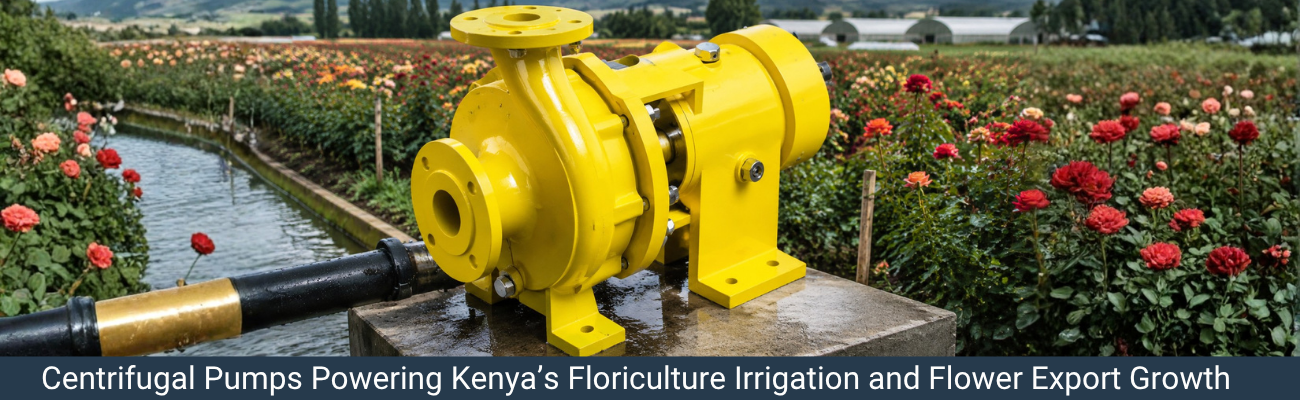
Kenya is the world's third-largest exporter of fresh-cut flowers, with annual export revenues exceeding USD 950 million and a market share of approximately 35% of all flowers sold in the European Union. The country's floriculture industry is built on a unique combination of high-altitude equatorial climate, volcanic soil fertility, and reliable access to freshwater - principally from Lake Naivasha in the Rift Valley. From the greenhouse complexes circling Lake Naivasha to the expanding rose farms of Mount Kenya's foothills, Kenya's flower industry operates on the precision of its irrigation systems - and at the heart of every irrigation system is the Centrifugal Pump.
Propeller Pumps India manufactures and exports Centrifugal Pumps, Self Priming Centrifugal Pumps, Centrifugal Process Pumps, Industrial Pumps, and Axial Flow Pumps that serve Kenya's floriculture and horticulture irrigation sector with the reliability, efficiency, and chemical resistance that flower farming's demanding agronomic requirements demand. This article explores Kenya's floriculture geography in depth, maps Centrifugal Pump requirements to specific farm and infrastructure types, and identifies the market opportunity for Indian pump manufacturers.
Kenya's Floriculture Geography: Where Centrifugal Pump Demand Is Strongest
Lake Naivasha - The Heart of Kenya's Flower Industry
Lake Naivasha in Nakuru County - a shallow freshwater Rift Valley lake at 1,884 metres altitude - is Kenya's floriculture epicenter. The lake's shores are ringed by over 50 large-scale flower farms owned by international companies including Flamingo Horticulture (Flamingo Holdings), Sian Roses, Oserian Development Company, Wilfrid Singh, and dozens of Kenyan-owned operations. These farms collectively export approximately 250,000 tonnes of fresh-cut flowers annually - primarily roses, carnations, chrysanthemums, and alstroemeria - to European markets through Nairobi's Jomo Kenyatta International Airport. Each large Naivasha flower farm requires multiple Centrifugal Pump stations: lake intake pumps abstracting water from the lake through screened intake pipes, pump stations feeding fertigation (fertilizer + irrigation) systems through drip lines within greenhouses, booster pump stations maintaining pressure across the farm's extensive drip irrigation network, and Self Priming Centrifugal Pump units for chemical dosing of crop protection chemicals and growth regulators through the fertigation system.
Mount Kenya Region - Nanyuki, Timau, and Meru
The Mount Kenya region - encompassing Nanyuki (Laikipia County), Timau, and Meru town - has emerged as Kenya's second-largest floriculture cluster. The region's combination of high altitude (1,800–2,400 metres), volcanic soils, and reliable borehole water from Mount Kenya's glacial aquifer creates ideal conditions for premium rose and carnation production. Key producers in the Mount Kenya area include Equator Kenya (Nanyuki), Kisima Farm (Timau), and Bureau Veritas-certified organic flower producers in Meru County. Mount Kenya farms' reliance on borehole rather than surface water makes Self Priming Centrifugal Pump and borehole-compatible Centrifugal Pump configurations the dominant pump type, as borehole drawdown levels (often 60–120 metres) require submersible pump systems with surface-level Centrifugal Pump booster stations.
Athi River and Machakos - Vegetable and Fruit Export Horticulture
The Athi River corridor in Machakos County - close to Jomo Kenyatta International Airport (JKIA) with its cold-chain logistics - has developed as a major hub for export vegetables and fruit: French beans, snow peas, baby corn, avocado, and mango export operations. The area's horticulture sector relies on drip and sprinkler irrigation systems fed by Centrifugal Pump stations drawing from the Athi River, seasonal ponds, and Nairobi Dam supplemented by groundwater boreholes. The proximity to JKIA makes this the highest-value horticulture corridor in Kenya, with farms investing in high-quality irrigation infrastructure including variable-speed Centrifugal Pump installations with automated pressure management.
Naivasha Surroundings - Kinangop and Aberdare Highlands
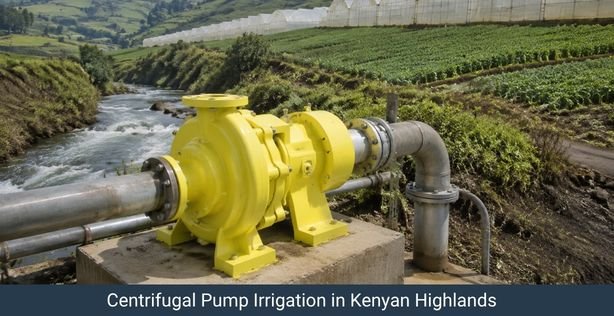
The Kinangop Plateau and Aberdare Range highlands above Lake Naivasha have seen significant expansion of new flower and vegetable farms drawn by lower land costs compared to lakeside positions. These highland farms abstract water from the Malewa River (the primary Naivasha tributary) and seasonal streams, using Centrifugal Pump intake stations at river level and booster pump stations to lift water to higher-elevation greenhouses. Centrifugal Pump Manufacturers supplying Kinangop farms must provide units rated for intermittent duty - highland farm irrigation typically operates in timed irrigation cycles rather than the continuous flow regime of large lake-shore farms, requiring Centrifugal Pumps with robust motor thermal protection for the frequent start-stop cycles.
Kericho and Nandi - Tea and Floriculture Dual-Use Irrigation
The tea growing highlands of Kericho and Nandi counties in western Kenya have seen increasing floriculture investment alongside the dominant tea industry, with several large-scale rose farms established on former or adjacent tea estates. These operations share irrigation infrastructure with tea irrigation systems, using Industrial Pumps and Centrifugal Pumps for both tea irrigation (during dry season) and flower production (year-round). The dual-use nature of pump infrastructure in Kericho creates opportunities for Centrifugal Pump Suppliers offering flexible multi-duty pump configurations.
Our Other Product
High Flow Agitator
Centrifugal Pump Applications in Kenya's Floriculture Operations
Lake and River Water Intake: High-Flow Centrifugal Pumps
The primary water intake pump for a large Lake Naivasha flower farm typically handles 200–2,000 m³/hr, drawing water from the lake through screened intake pipes to on-farm storage reservoirs. These lake intake Centrifugal Pumps operate continuously during permitted abstraction windows (regulated by Kenya's Water Resources Authority under the Water Act 2016), requiring high reliability and efficiency. Propeller Pumps India's Centrifugal Pump range for lake intake service includes end-suction and split-case configurations in cast iron (for general water service) and SS 316 (for mildly alkaline lake water), with IE3 premium efficiency motors meeting Kenya's Energy and Petroleum Regulatory Authority (EPRA) energy efficiency requirements.
We are Available on Chat, Call, Email!
 Email!
Fertigation Systems: Centrifugal Pumps for Chemical Injection
Kenya's flower farms use fertigation - the injection of soluble fertilizers and crop protection chemicals directly through the drip irrigation system - as the primary nutrient and pest management tool. The main fertigation pump must maintain precise pressure (typically 2.5–4.5 bar at the greenhouse header) while handling fertilizer-solution water with pH 5.5–6.5 (slightly acidic, adjusted with nitric acid or phosphoric acid). Centrifugal Process Pump configurations in SS 316L or PVDF-lined construction are specified for the direct fertilizer solution service, while PP Pumps and Polypropylene Pumps handle the concentrated acid dosing systems used for irrigation water pH adjustment. Self Priming Centrifugal Pump units are preferred for the chemical injection stock tanks, where tank emptying and re-priming is a daily operational requirement.
Post-Harvest Water Treatment: Chemical Dosing Centrifugal Pumps
Kenya's flower export industry is regulated by the Kenya Plant Health Inspectorate Service (KEPHIS) and European market phytosanitary import standards (EU Regulation 2016/2031). Post-harvest flower treatment - including stem-end rehydration solutions, pulse treatments with silver thiosulfate (STS) for carnations, and biocide dipping for fungal control - requires chemical handling pump systems in flower pack houses. Centrifugal Pumps in SS 316L and PP Pump configurations handle the biocide, STS, and rehydration solution circulation in pack house treatment tanks.
Booster and Pressure-Sustaining Pumps: Farm Distribution Networks
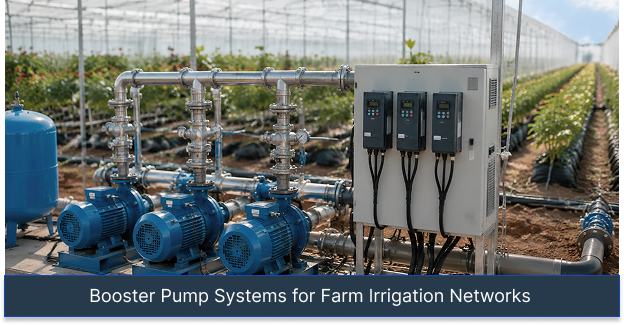
Large flower farms covering 100–500 hectares require multiple Centrifugal Pump booster stations to maintain consistent drip irrigation pressure across the farm's greenhouse zones. Pressure variation exceeding ±10% of design pressure causes non-uniform water application and crop stress - directly affecting flower quality and export grade. Variable-speed Centrifugal Pump booster sets with pressure control - supplied with VFD (Variable Frequency Drive) controllers - are increasingly standard in premium Kenya flower farms. Propeller Pumps India's Centrifugal Pump range is available with VFD-compatible motors for variable-speed booster applications.
Kenya's Pump Market: Demand Drivers and Import Channels
Kenya's agricultural pump market is estimated at USD 80–120 million annually, with floriculture and horticulture representing the highest-value segment (premium specifications, reliable supply, and certified performance required by export market buyers). Traditional suppliers include European brands (Grundfos, KSB, Lowara) for the premium farm segment and Chinese brands for the smallholder market. Indian Centrifugal Pump Exporters occupy the strategic middle ground - offering European-comparable quality at 25–40% lower prices, with Mombasa Port receiving direct shipping from Nhava Sheva in 14–18 days. Kenya's Investment Authority (KenInvest) actively promotes Indian investment in Kenya's manufacturing sector, and the India-Kenya bilateral trade relationship - which has grown to USD 4.5 billion - supports Indian exporters with diplomatic commercial facilitation.
Centrifugal Pump procurement in Kenya's floriculture sector flows through Nairobi's industrial supply district (Industrial Area, off Enterprise Road), specialized agricultural equipment dealers in Naivasha town and Nanyuki, and direct imports by large farm groups managing their own procurement. Centrifugal Pump Manufacturers with Kenyan distributor relationships and local stock of commonly used pump sizes are strongly preferred over manufacturers requiring direct import for every purchase.
Conclusion: Centrifugal Pumps as Kenya's Floriculture Engine
Kenya's flower export industry - a USD 950 million annual earner supporting hundreds of thousands of livelihoods - depends fundamentally on the reliable, efficient operation of Centrifugal Pump systems at every stage from lake intake to greenhouse drip line. From the volcanic shores of Lake Naivasha to the borehole fields of Mount Kenya and the drip-irrigated vegetable farms of Machakos, Centrifugal Pumps and their associated Self Priming Centrifugal Pump, Process Pump, and Industrial Pump configurations form the hydraulic backbone of Kenya's most successful export industry. Propeller Pumps India offers Kenyan floriculture and horticulture buyers a technically proven, competitively priced Centrifugal Pump solution from India's most experienced pump manufacturer - backed by the export credentials, documentation, and after-sales support that Kenya's quality-conscious farm operators demand.